

Torrens, community or strata title: which does your subdivision need?
The practical difference between the three, and why it is a design question rather than paperwork that happens afterwards.
Most people come to a land division thinking the question is how many lots they can get. The more useful question, and the one that gets asked too late, is what kind of title those lots will have.
It changes the design. It changes what you can sell the lots for. And it is far easier to settle at the start than to unpick later.
Torrens title
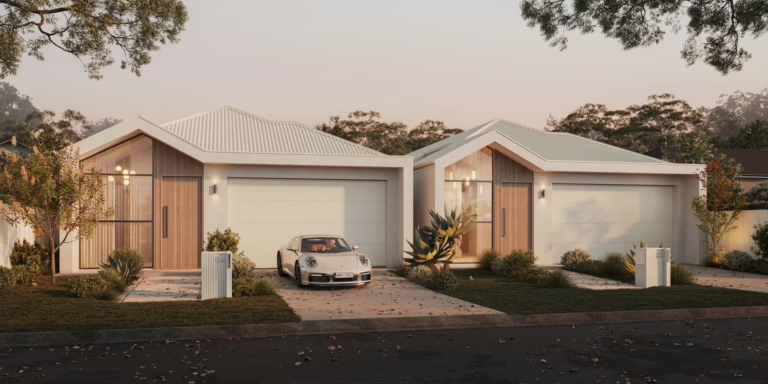
Each lot gets its own separate title. No shared property, no shared obligations, no corporation to deal with.
This is the cleanest outcome and it is the one most buyers prefer, because it behaves like any ordinary house block. If your site can achieve it, it usually should.
What it needs is for each lot to stand on its own. Its own street frontage or its own legal access. Its own services. Nothing essential shared with the neighbour.
That is why corner allotments are such useful development sites. At Lockleys the corner gave us two frontages, which meant two driveways, two private rear yards and no shared anything.
Community title
A community scheme creates separate lots plus common property that the lot owners share, managed by a community corporation.
The common property is usually the thing the lots cannot avoid sharing. A single driveway serving dwellings at the rear is the classic example. If three homes come off one crossover, that driveway has to belong to someone, and a community scheme is how it gets owned and maintained.
It is a perfectly normal outcome and plenty of good developments use it. It does come with a corporation, insurance and ongoing administration, and some buyers price that in.
Strata title
The older form, created under separate legislation. It divides a building rather than the land, which suited blocks of units.
For new residential land divisions in South Australia it is rarely the structure used now. If someone is talking to you about strata on a new project, it is worth asking why.
Which one your site can achieve
It comes down to access and services more than anything else.
If every lot can reach the street on its own land, Torrens is usually available. If the only way to get to the rear of the site is a shared driveway, you are looking at community title. Service connections, easements and stormwater can push it either way.
At Queenstown the clients were first-time developers, and the title structure was part of the feasibility work rather than something dealt with at the end. Stormwater control and neighbour negotiation came into it early, which is exactly when they are cheapest to solve.
Why it changes the design
This is the part that gets missed.
If you are chasing Torrens title, the design has to give every lot its own access. That might mean a narrower building footprint, or a different driveway position, or accepting one fewer dwelling to make the geometry work.
If a community scheme is acceptable, the shared driveway frees the layout considerably, and the site may carry more.
So the title question is not paperwork that happens after the design. It is one of the inputs to it.
Get it checked
Your surveyor and conveyancer confirm the structure, and your council’s planning rules will have a view. What we do is work out early which outcomes the site can realistically support, so the design is drawn for the right one rather than redrawn for it.
If you are weighing up a site, that assessment is worth doing before anything else. It is the cheapest work you will commission on a development.